Artificial Intelligence (AI)
for systems that benefit people
I'm interested in how AI can improve long-standing systems that are meant to benefit people.
I spent two decades running regulated, compliance-critical programs, including overseeing compliance for a $1B+ federal program.
Work
Software and tools I build and operate.
Gavelin MCP
A Model Context Protocol (MCP) server I founded and operate that lets AI assistants search state legislation directly: bills from all 50 states and DC, and hearing transcripts from nine states with each speaker identified by name, at 98.8% attribution accuracy across 1.4 million segments.
State AI Legislation Tracker
Every AI law enacted in the 50 states and DC since 2024, the AI bills still pending, and what legislators and witnesses said about them in nine states with hearing transcripts.
AI Website Audit
Enter a URL and get a graded read of how an AI system interprets the site: readability, data accessibility, structure, and content clarity.
The Gilded Age of AI
This timeline looks at the risk that AI will be misused to exploit people, in what I call a gilded age of AI: my own predictions scored against what actually happened, the forecasts still open, and the gap between the pace of the technology and the institutions meant to absorb its consequences.
Background
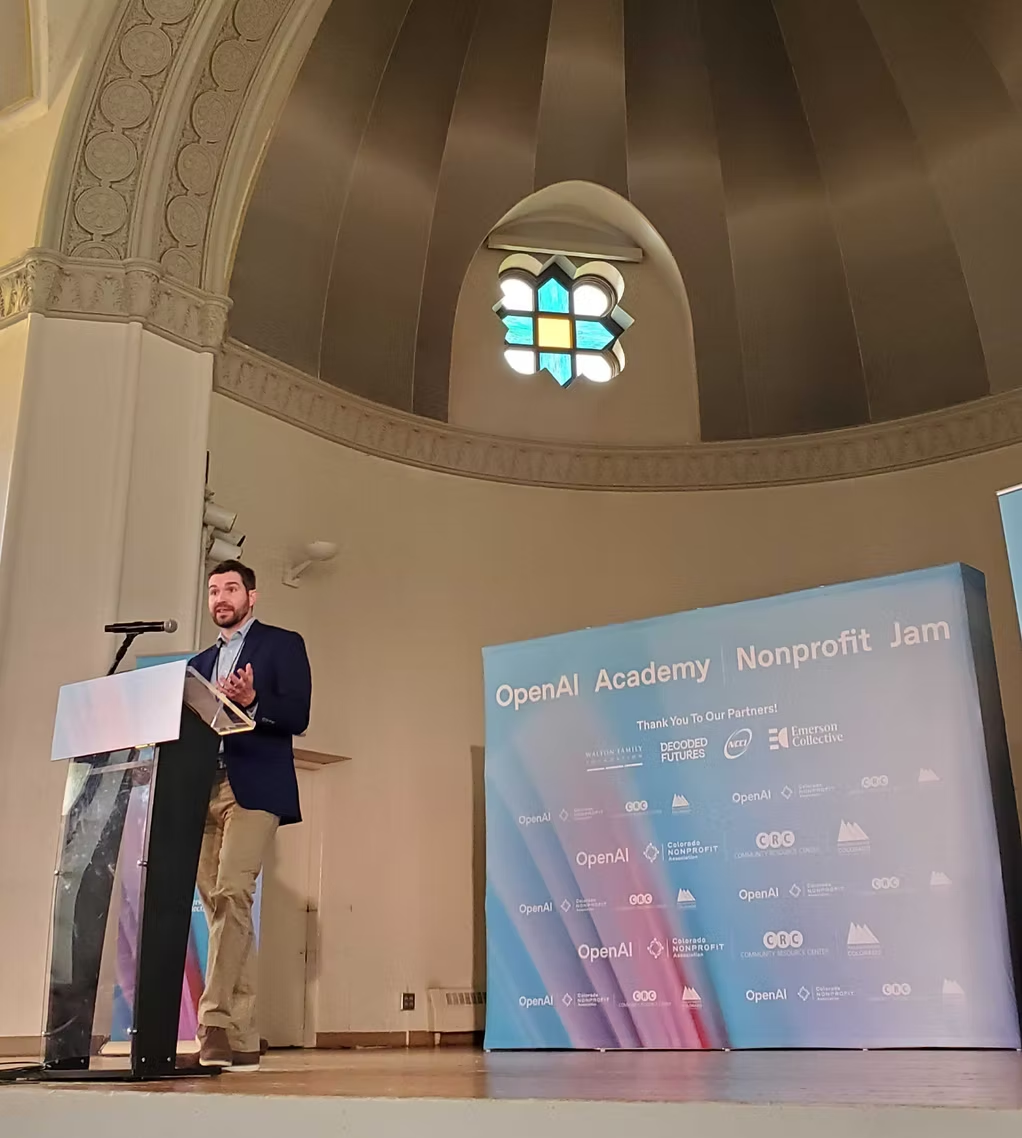
I spent two decades running regulated, compliance-critical programs. As a state compliance officer I owned quality control, corrective action, and federal-regulator relations for a $1B+ federal program, cutting open corrective action plans from roughly fifteen to under five. Before and after it: county-level outreach management, executive direction of a $5–9M organization that raised more than $30M across philanthropy and government, and legislative work that helped pass 25 pieces of state legislation.
More →